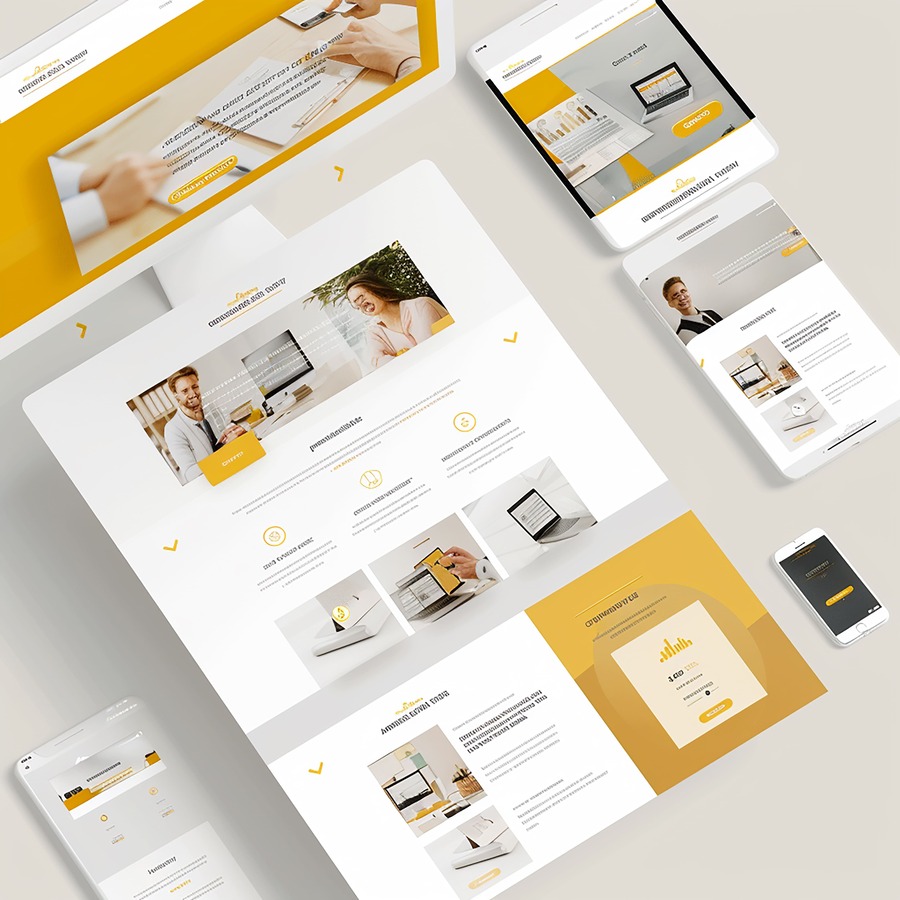

Let’s briefly clarify what brand identity is using an example. Imagine you walk into an unfamiliar shopping centre to withdraw cash from a PrivatBank card. Would you follow the signs or ask the security guard at the entrance? Usually these are unnecessary steps, since your eyes will simply start automatically searching for the characteristic green colour. This is brand identity – when individual elements (colour, image, sound, symbol, etc.) become associated with a brand and are firmly linked to it.
What is identity
So, what is identity? The word itself comes from the English «identity» – individuality, uniqueness, sameness. Accordingly, identity is a special set of elements that form the unique image of a brand. If a brand is compared to a person’s worldview and character, then brand identity is their appearance and manner of behaviour.
Identity, corporate style, and branding: what’s the difference
Identity vs branding or corporate style: what should you focus on when forming brand identity? Or are these actually identical concepts? If we use the analogy again, all three elements are separate parts of the same mosaic.
| Branding | Identity | Corporate style |
| Strategy and process: from the brand’s values, vision, and mission to the emotions you aim to evoke in the consumer | The image system, i.e. a set of elements by which the brand is recognised (like a person’s appearance and manner of self-expression) | The visual shell: images, colours, symbols, logos that distinguish the brand from its counterparts |
| Set of elements: a comprehensive brand positioning strategy in the market (Who are we? Why do we work? What value do we bring?) | Set of elements: the brand’s mission, values and purpose, the image the consumer sees, ToV and brand vocabulary, visual-verbal associations, credo and sound elements | Set of elements: logo, colour palette (takes into account colour psychology), fonts, shapes, graphics, key visuals, spatial placement |
When speaking about the difference between identity and a logo, it is worth noting that a logo is the main, but not the only element of identity. It visually represents the brand, but works fully only in conjunction with other tools for individualising the image.
Brand identity elements
When examining in detail what brand identity is, it is important to discuss its visual and verbal elements, as well as its main carriers.
Visual identity
Visual identity consists of graphic elements that present and distinguish the brand. These include the colour palette, logo, images, typography, patterns and iconography, product style, packaging, graphic design, and photography.
Verbal identity
The verbal elements of brand identity determine how the brand speaks and expresses its thoughts. This includes Tone of Voice, slogan, naming, key messages, vocabulary, and speech rhythm.
Identity carriers
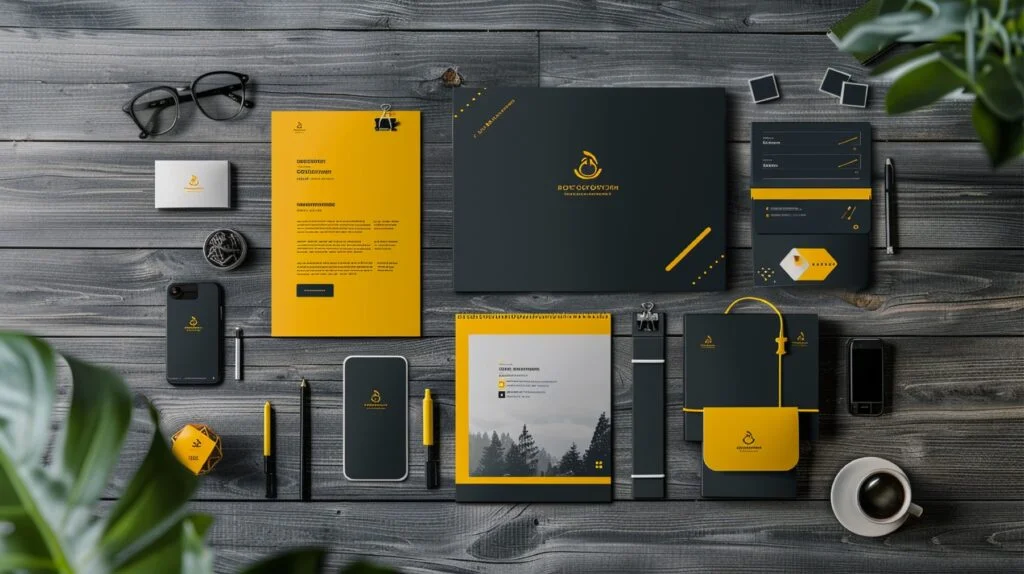
It is recommended to make everything that contributes to positive brand perception and recognition a carrier of identity. Among the main platforms: the website and mobile app, social media (in particular, Instagram and Facebook page design), e-mail newsletters, TV and online advertising, business cards, merch, external signage and interior elements, uniforms, packaging, POS materials (print advertising), business documentation, banners, etc.
Why a business needs identity
Brand identity is a multifunctional tool. Why identity is needed:
- Recognition and differentiation. Sets the brand apart from competitors and makes its market presence unique, so that the consumer chooses your product over similar ones.
- Trust. Forms the perception of quality and consumer orientation.
- Positioning. Demonstrates belonging to a social or thematic group.
- Unity within the team. Establishes shared values and aspirations.
- Savings on advertising. Eliminates the need to explain, since the brand is already recognised.
Identity is an optional condition when it comes to short-term tasks. But in the long run it allows you to form a communication system on which all consumer contacts will be built. A startup’s identity may be limited to basic solutions to reduce product launch costs. But even at this stage it is worth thinking about the first impression that will set you apart and contribute to brand development. Identity for small businesses may also seem optional, given the small number of consumers. But forming a cohesive image that inspires trust will help control the perception of your brand and attract the maximum volume of your target audience.
What brand identity is – examples
Striking examples of brand identity:
- Nike: the iconic swoosh + the slogan Just Do It + motivating Tone of Voice.
- Apple: minimalism as a system + purity of form and white colour + a restrained Tone of Voice that emphasises status and quality.
- Rozetka: a smiley face that evokes positive emotions + fresh green colour associated with reliability + a friendly Tone of Voice.
- Sense Bank: fonts from Heorhiy Narbut’s alphabet + slogans that play on the word «sense» + a unified design system across branches, the app, and the website.
Among examples of brand identity in Ukrainian small business, one can cite the cosmetics manufacturer Sue. In the name, the letter «E» has the shape of a small leaf, which underlines the natural composition of the products. The packaging colour often corresponds to the product’s fragrance: masala – a shade of tea with milk, magnolia – pink, sea buckthorn – orange, etc. The brand’s Tone of Voice is caring and friendly, with the signature address «Sue Girl» to customers.
Website identity – a separate aspect
A website without individuality looks faceless, which does not contribute to successful conversions, even if its technical condition is impeccable. Website identity is realised through UX identity (clear navigation, speed of access to key functions, visual logic in line with the brand’s DNA), UI kit (buttons, icons, animations, micro-interactions, etc.), colours, fonts, and illustration style. Professional web development takes into account the principles of identity, which contributes to a cohesive brand image.

How much does identity development cost
The answer to how much identity costs depends on a range of factors: the scope of work for the project, urgency, the number of specialists involved, the need to use additional resources, the number of revisions, etc. The contents of the development package are determined by the client according to their request. This can be simply a logo, a small or full brand book, identity development with subsequent promotion, etc.
The least expensive option is freelancers – $150–350, at a studio – $350–700, at a top agency – $1,000–5,000.
How to create identity: stages
Having understood what identity is, you can move on to analysis and strategy development. It is worth starting with the key questions: what is our brand’s purpose in the market (mission), what beliefs shape the brand’s policy (values), what sets us apart from competitors (positioning), what is the brand’s character and voice.
Creating visual identity from scratch can only be done by experienced specialists, so to simplify the task you can draw inspiration from references. The Instagram feed and platforms such as Behance, Dribbble, and Pinterest are very helpful for this. When creating a brand book, it is worth focusing on the typical sections used by Ukrainian businesses: history, mission and vision, logo, colour palette, typography, graphic elements, messages and ToV, identity carriers. After this, you can move on to implementation.
Comprehensive identity development and implementation
The specialists at LuxSite agency know exactly what brand identity is and how to make a product recognisable in the market. If you want to increase your business’s visibility through its individualisation, or order comprehensive identity development, its implementation, and subsequent SEO promotion, the team of specialists is ready to begin work on any request.