

What is a snippet? A snippet is an information block in search engine results. It consists of a title and a paragraph underneath, often showing a product or service description, a quick link, and a favicon. When choosing which link to click on from the search results, users quickly glance over the phrases under each line. If the microtext appeals to them, they visit the website. Therefore, the more useful and concise the snippet, the faster the website’s audience grows.
SEO specialists believe snippets are often underestimated, but they significantly impact website traffic. Users are more likely to visit websites with attractive and helpful descriptions.
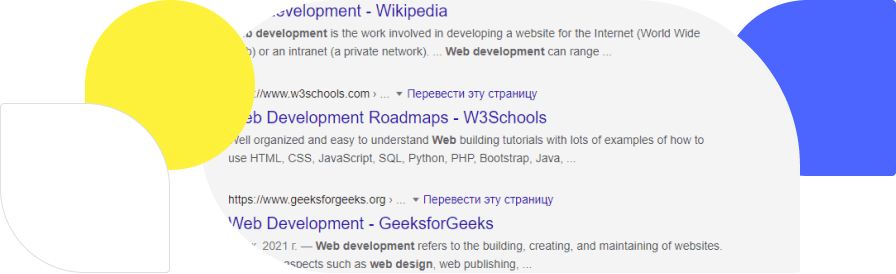
Who creates the snippet?
The snippet is automatically generated by search engines. Each element has the same length: the title is 70-80 characters, and the description is 160-240 characters. To create the description, the system gathers information from the page that best matches the user’s query. Most often, the system retrieves data from the Title and Description tags, as well as the site’s content. It will be much better if the webmaster prepares this information in advance: when creating these tags, avoid stop words, and start the phrase with keywords.
Snippet in Google
Google forms the snippet either from the Title and Description or from other content if it doesn’t find significant information in the Description. If the site has products, original articles, comments, recipes, reviews, contacts, or multimedia data, Google will create expanded snippets. The description in this case may include information about prices, images, and other characteristics.
How to change the snippet of a website that Google creates?
To change the final appearance of the snippet, use a few life hacks:
- Properly write the tag messages, using the schema.org markup. Search Console is also used for this.
- Beautiful snippets are practical snippets. The message should answer the user’s query.
- Only place high-quality content on the page, so the search engine can choose the right phrases.
- Use a favicon (the icon next to the result in the system) to attract users’ attention.
- Describe advantageous promotional offers.
- Check what competitors’ snippets say.
As is well known, most users only view the first few results in search engine results. Snippets are the “face of the site” and one of the most important factors in search results. For a user to click on our site, the snippet must be attractive, clear, understandable, and practical.