
“An algorithmic Google filter sometimes requires you to take one step back in order to move two steps forward. That’s exactly what happened with LuxSite.”
– Inna Myroshnychenko, Head of SEO
What Is a Google Filter and How to Identify It

Most website owners perceive a “Google penalty” as a message in Search Console. In reality, that’s the easiest case: there’s a clear cause and a clear solution. A much more complicated situation is an algorithmic filter, which gives no signals and simply blocks a site’s growth.
Google uses two types of restrictions: manual actions and algorithmic filters. Manual actions are applied by reviewers and appear in Search Console. Algorithmic filters work automatically: the algorithm evaluates content, backlinks, technical health and overall trust. If it detects manipulation or weak quality signals, the site loses visibility without any warnings.
Modern Google algorithms (including updates like Panda and Helpful Content) operate continuously. That’s why instead of a sharp drop, a site often just “freezes” – it remains indexed but stops ranking.
Typical signs of an algorithmic filter:
- No growth or a sharp drop in traffic
- Pages are indexed but don’t rank in the top results
- Commercial pages bring no traffic
- Search Console shows no issues
- Technical audit reveals no critical errors
Unlike seasonal or technical declines, a filter creates a systemic effect: the site loses visibility across groups of queries.
This is exactly what happened to the LuxSite project after migration – and this case clearly demonstrates what “invisibility” looks like in practice.
LuxSite Case: How the Site Became “Invisible”
Background
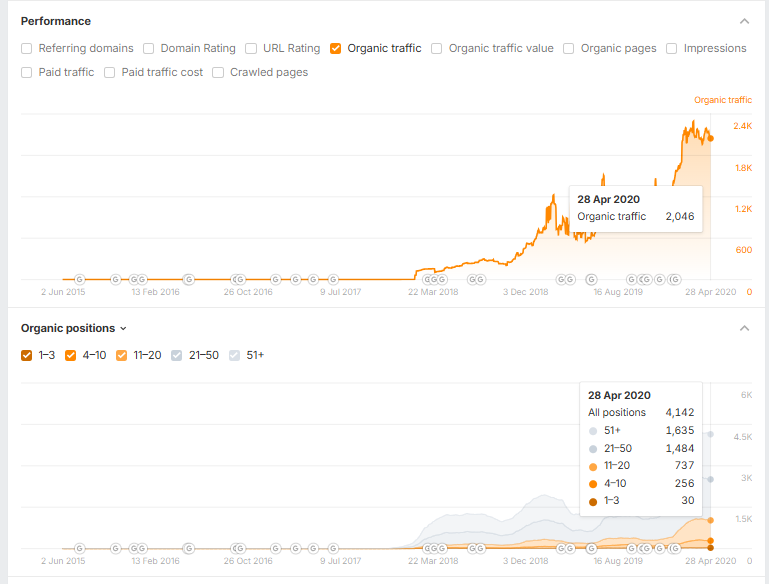
Before migration, LuxSite showed stable performance: strong rankings for SEO queries, consistent organic traffic, presence in top results for mid- and high-frequency keywords. A classic example of a growing website.
Then several logical business decisions were made:
- Website redesign
- Domain change
- Merging multiple domains via 301 redirects into one
What Was Done “By the Book”
The team followed a standard migration checklist:
- Set up 301 redirects from old domains to the new one
- Conducted an audit and disavowed some low-quality links
- Connected the new site to Google Search Console
- Performed technical optimization
- Updated and improved content
Everything looked like a textbook migration.
The Result After Launch
Reality turned out differently:
- The site was indexed correctly
- Commercial pages didn’t appear even in the top 100
- Organic traffic dropped to zero (except for low-frequency blog queries)
- Search Console showed no warnings or manual actions
This is a classic algorithmic filter – no hints.

Why It Happened: Root Cause Analysis
After detailed analysis, the main hypothesis was simultaneous mass redirects from multiple domains.
1. Transfer of “toxic” backlinks
A 301 redirect transfers everything – both strong and harmful links. If old domains had low-quality backlinks, they were passed to the new domain. Google officially recommends re-uploading the Disavow file in Search Console for the new domain, since it doesn’t inherit previous settings (official source: Google Search Center).
2. Suspicious link growth signal
The new domain quickly received a significant number of backlinks from multiple sources at once. According to a Moz study based on a sample of 30,000 domains, improperly executed migrations lead to traffic losses that are twice as high as those from correctly implemented ones. A sharp spike in backlink growth is one of the signals of potential manipulation – even if everything is technically clean.
3. Overloading a new domain’s trust
A new domain starts with zero reputation. When it suddenly receives a massive amount of signals from multiple sources, Google may treat it as artificial authority building.
4. Lack of gradual rollout
Large-scale structural changes without phased monitoring create stress for algorithms. Instead of a natural transition, Google sees a sharp and suspicious spike.
The Solution That Worked: 3 Steps
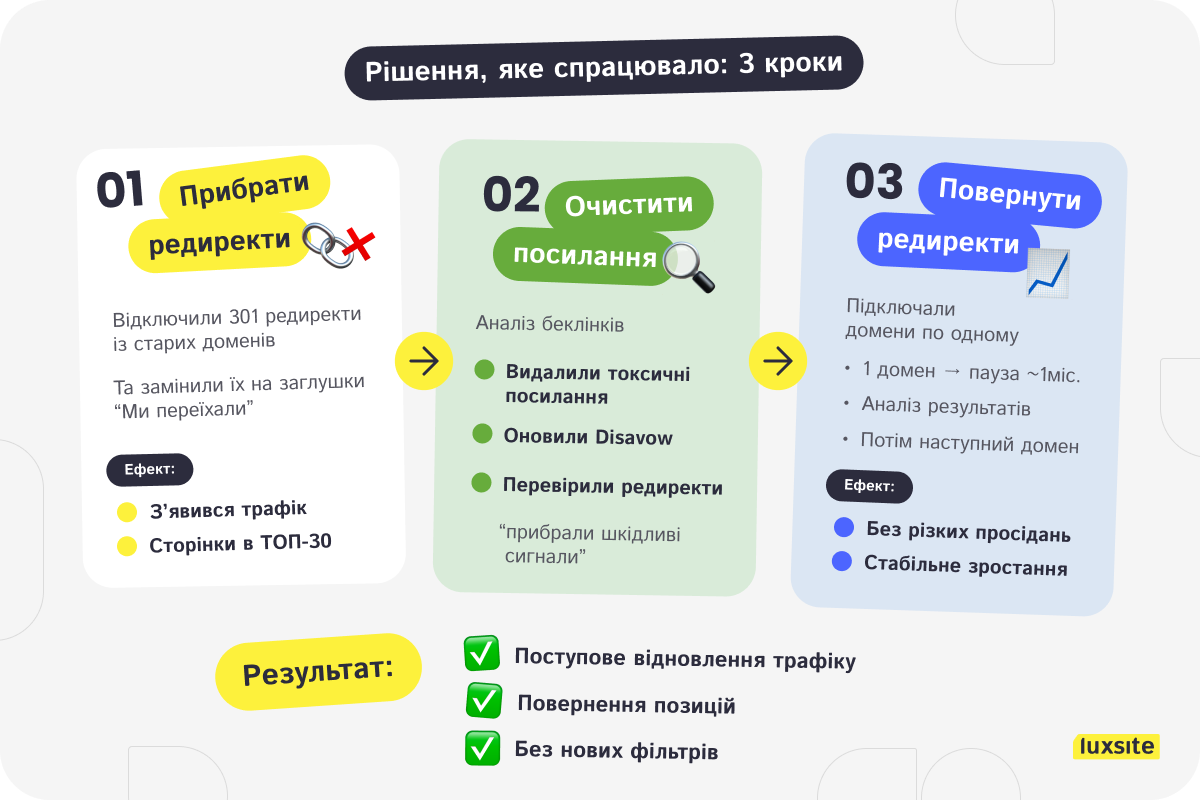
Step 1. Remove redirects completely
This was a counterintuitive but critically important step.
Instead of using redirects, static placeholder pages were set up on the old domains with a message saying, “We’ve moved to a new domain” – without any automatic forwarding, just information for visitors.
The effect appeared relatively quickly: organic traffic started to return, and commercial pages reached the top 20–30 positions. This confirmed the hypothesis – the redirects were the root cause.
Step 2. Re-audit and clean the backlink profile
A full backlink analysis was conducted across both the old domains and the new one:
- Toxic and low-quality links that had not been disavowed during the initial audit were identified
- These links were disavowed using the Disavow Tool in Search Console for the new domain
- The absence of redirect chains was verified (Google recommends no more than 3 hops, with direct redirects being optimal)
Step 3. Gradual reintroduction of redirects
The key difference from the initial approach was gradual implementation:
- Domains were connected one at a time
- A pause of about one month was maintained after each connection
- Ranking and traffic dynamics were analyzed
- The next domain was only added after performance stabilized
There were no sharp drops after the “proper” reintroduction of redirects.
Results
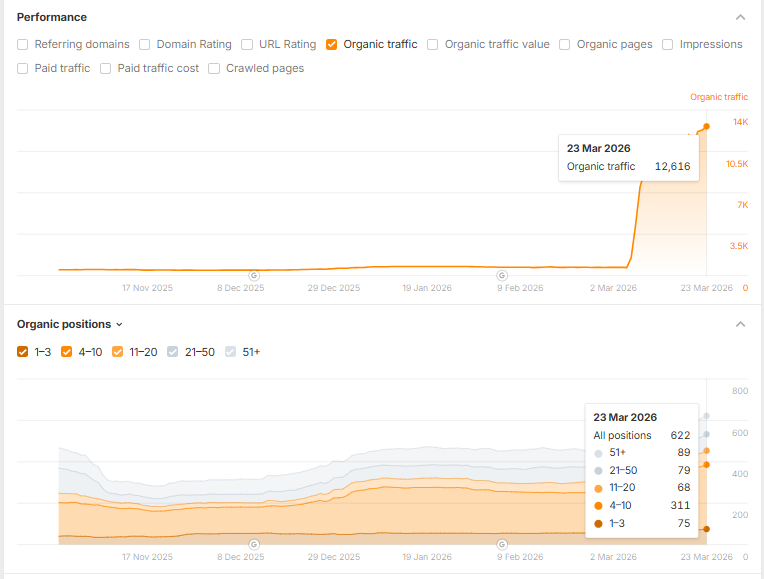
Steady and gradual recovery without new filters:
- Rankings for commercial queries returned
- Organic traffic increased
- Stable growth with no new declines after each redirect
Risks of 301 Redirects: When They Hurt
301 redirects are a powerful SEO tool. Google confirms they don’t cause PageRank loss when implemented correctly. But there are critical nuances that are frequently ignored:
| Situation | Risk Level | Why |
| Single redirect with a clean profile | Low | Google handles it correctly |
| Simultaneous redirects from 3+ domains | High | Looks like manipulation |
| Redirects from domains with toxic links | Critical | All “bad” signals are transferred |
| Long redirect chains (5+ hops) | Medium | Signal transfer may be cut off |
| Redirect to irrelevant pages | Medium | Treated as soft 404 |
| Using 302 instead of 301 | Medium | Authority is not transferred |
Practical Domain Migration Checklist
Before launch:
- Conduct a full backlink profile audit of all old domains (Ahrefs, Semrush)
- Disavow toxic links before starting the migration
- Check the new domain for any previous penalties or manual actions
- Perform 1:1 URL mapping: each old page → a specific relevant new page (not the homepage)
- Ensure all target pages actually exist (a redirect to a 404 page is worse than no redirect at all)
During migration:
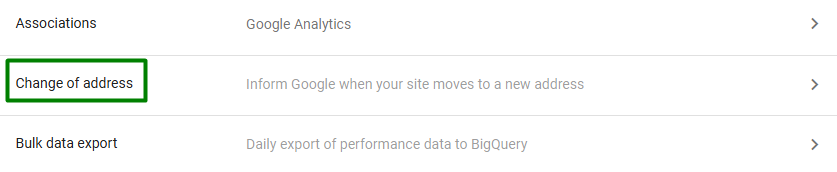
- Connect domains one at a time with ~4-week intervals, and make sure to properly complete the site migration (Change of Address) to the new domain in Search Console
- Re-upload the Disavow file in Search Console for the new domain
- Update the sitemap and request reindexing
- Check for redirect chains – no more than 3 hops
- Update internal links to point directly to final URLs, without going through redirects
After launch:
- Weekly monitoring of rankings and traffic (first 2 months)
- Check Search Console for manual actions
- Monitor indexing via site:domain
- Analyze Core Web Vitals
- Compare traffic drops with Google updates
Key Takeaways
- No warning doesn’t mean no problem. Algorithmic filters don’t send signals. If a site is indexed but not ranking, that’s already a symptom that requires investigation.
- Mass redirects create stress for a new domain. One redirect with a clean backlink profile is fine. Redirecting three domains at once with a mixed link profile is risky. The difference between these scenarios can cost 6–12 months of recovery.
- Sometimes rollback is progress. Removing redirects and letting the site “breathe” is an unconventional but often correct decision. It’s not a failure – it’s diagnostics.
- Backlinks persist after migration. Old links continue to influence the new domain through redirects. Link auditing is not a one-time task but an ongoing process.
- Gradual implementation beats speed. It’s better to spend 2–4 months on a proper migration than 6–12 months recovering from a filter.