The AI-driven eCommerce market is entering a phase of rapid and irreversible growth. Valued at approximately $8.65 billion in 2025, it is expected to exceed $22 billion by 2032, driven by advances in machine learning, generative AI, and real-time data processing. By 2026, Artificial Intelligence will no longer be an optional enhancement – it will become a core component of modern eCommerce platforms, shaping how online stores operate, scale, and compete. However, successful AI adoption depends not only on technology itself, but on the quality of the underlying IT infrastructure. Advanced AI solutions require clean, well-structured, and scalable code, stable system architecture, and the ability to evolve without technical limitations. Without a reliable foundation, even the most promising AI features struggle to deliver long-term business value.
This is where the experience of our partner Codeska plays a key role. As an experienced software development partner, they help businesses build eCommerce platforms that are ready for growth – from small online stores to complex, high-load marketplaces. Codeska team advises on optimal technology choices, designs robust and future-proof architectures, and delivers solutions to the highest development standards, ensuring systems remain flexible, maintainable, and scalable over time.
Based on their hands-on experience and analysis of global market trends, the following five AI trends highlight the most impactful opportunities for improving customer loyalty, operational efficiency, and ROI in 2026. For companies aiming to grow sustainably, these trends demonstrate not only what to implement, but how to build eCommerce platforms the right way from the start – with a strong, reliable technical foundation.
Top 5 AI Trends for eCommerce Websites in 2026
1. Hyper-Personalization at Scale
AI personalization is no longer a “nice to have” – it’s table stakes. Advanced AI engines will dynamically tailor every customer’s journey in real time: changing homepage layouts, product recommendations, pricing, and promotions based on a shopper’s browsing history, past purchases, location, device, time of day, and even contextual data like weather or trending styles. In practice, this means every visitor sees a unique, relevant storefront. The payoff is huge. Industry studies show that companies excelling at AI-driven personalization generate roughly 40% more revenue than others. Shoppers demand it: 71% of consumers expect personalized interactions, and a similarly large majority feel frustrated when content isn’t customized to them. In short, personalized AI experiences greatly boost engagement and conversions. Main points on creating tailored customer experiences:
- Revenue lift – fast-growing retailers using AI personalization see about 40% higher revenue versus slower adopters. For example, one platform reported that 40% more revenue was directly attributable to personalization.
- Customer expectations – roughly 7 out of 10 shoppers expect personalization (and become upset when they don’t get it). IBM research also finds 71% want tailored content and 67% get annoyed when it’s missing.
- Tactics – AI can power dynamic pricing, individualized email or chat content, and hyper-relevant product suggestions. For instance, as a customer browses for “running shoes,” the site might instantly push a unique landing page highlighting the latest trainers and a personalized coupon. All major platforms (from Shopify to Amazon) now offer AI-based recommendation engines.
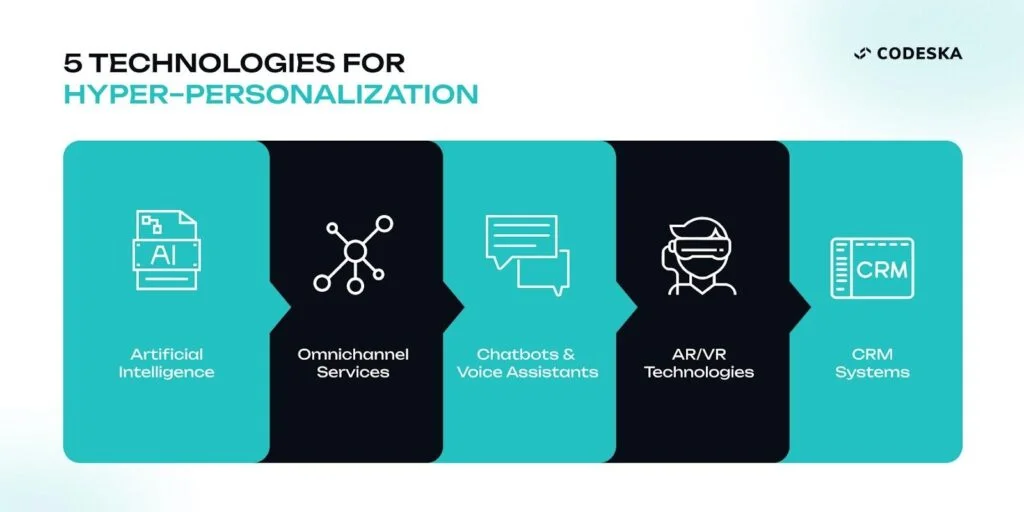
Putting it together, hyper-personalization means treating every customer as a VIP. When done well, AI-driven personalization drives higher average order values, repeat purchases, and long-term loyalty. It transforms a static website into a responsive, 24/7 personal shopper for each visitor.
2. The Rise of Agentic AI (AI Shopping Assistants)
Chatbots are evolving into fully autonomous shopping agents. Imagine a virtual assistant that not only answers questions, but actively shops for you – comparing products, finding deals across sites, and even completing purchases automatically. This “agentic AI” trend is accelerating, and it’s already driving dramatic results. Studies show that shoppers who engage with an AI chat assistant convert at roughly 4× the rate of unassisted visitors (about a 12.3% conversion rate with AI chat vs. 3.1% without). In other words, giving customers a smart “shopping concierge” can quadruple conversions.
Major tech players are racing to enable this new experience. In late 2025, Stripe and OpenAI launched the Agentic Commerce Protocol (ACP), which powers Instant Checkout inside ChatGPT. U.S. users can now ask ChatGPT to recommend products and then check out directly within the chat window, with Stripe handling payment. (Merchants on platforms like Etsy and Shopify can accept these AI-driven orders.) Google is also building open agentic standards: it announced a Universal Commerce Protocol (UCP) co-developed with Shopify, Etsy, Wayfair, Target, and others. This lets AI agents seamlessly handle discovery and checkout across many stores. Even Shopify itself recently integrated its platform with Microsoft’s Copilot so that customers can complete orders conversationally. Companies like PayPal and Amazon are likewise enabling AI-driven purchasing (Google’s UCP will support Google Pay and soon PayPal, and Amazon is developing its own shopping assistants).
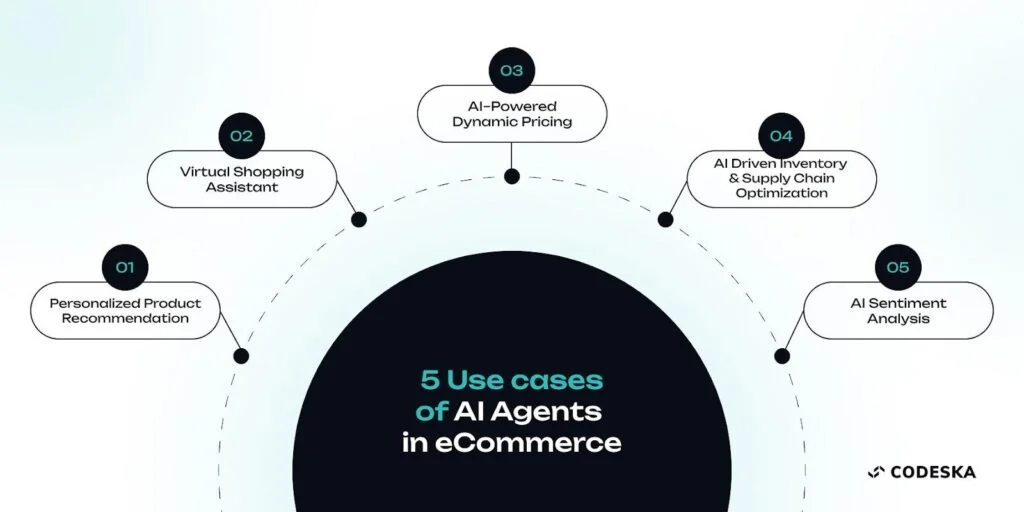
In practice, agentic AI means shoppers will increasingly get real-time, voice- or chat-based recommendations and one-click purchases. Rather than browsing categories, a customer might say “Find me a red sofa under $1200,” and an AI assistant scours multiple stores, applies coupons, and finalizes the order – all without the customer touching the keyboard. Early data show this approach greatly boosts sales: AI shopping assistants turn passive browsers into active buyers, raising engagement and loyalty. As one industry source notes, companies that deploy AI agents gain a major edge, since shoppers who use these agents buy more frequently.
3. Visual & Voice Commerce
Online shopping is getting more hands-free and visual. Millions of consumers now discover products by image or speech, not just text. Visual search – where you snap a photo and search by image – has surged (~70% year-over-year globally). For example, Google Lens and Pinterest Lens enable shoppers to point their phone at a piece of furniture or clothing and instantly find similar items online. Retailers must optimize for this by integrating image-recognition search on their sites and apps.
Voice commerce is booming too. Smart speakers and voice assistants (Alexa, Siri, Google Assistant) are becoming shopping tools. Nearly 37% of shoppers worldwide now make purchases using voice commands, and over 30% of U.S. consumers have already bought something by voice. Younger generations lead the way: Gen Z and Gen Alpha favor hands-free interaction and expect to speak their orders aloud. To capture this market, eCommerce sites should support natural-language product search and ensure smooth voice checkout (for example, by enabling Google Pay, Apple Pay, or PayPal via voice).
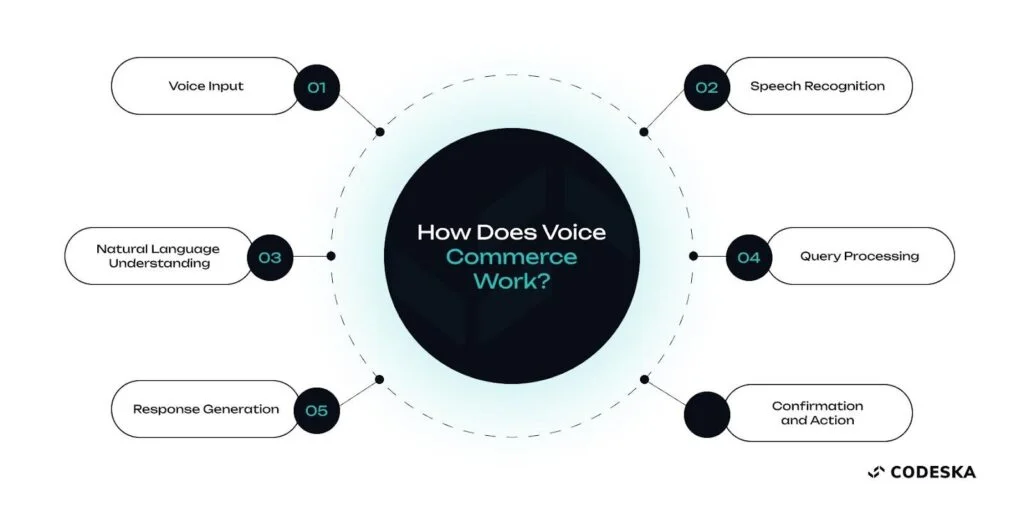
In practical terms, trend #3 means enhancing your site for non-traditional discovery. Add “search by image” capability so visitors can upload or point to a photo, and integrate with voice assistants so customers can order or ask product questions by speaking. As a result, you’ll reach more customers (especially younger ones) and reduce friction – no more missed sales because the shopper can’t recall the perfect keyword.
4. Smart Supply Chain & Predictive Analytics
AI isn’t just a front-end gimmick; it’s transforming back-end operations. Advanced predictive analytics will enable retailers to forecast demand and manage inventory with unprecedented accuracy. By analyzing historical sales, seasonality, and even external signals (like social trends or weather), AI can predict which products will sell out or oversaturate. Early adopters report substantial efficiency gains: AI-driven inventory planning can cut stock levels by 20–30% while still meeting demand. Simultaneously, smarter logistics planning using AI (for routing, warehousing, etc.) can reduce transportation and logistics costs by up to 5–20%. In practice, this means faster delivery times, fewer stockouts, and less wasted capital tied up in unsold goods.
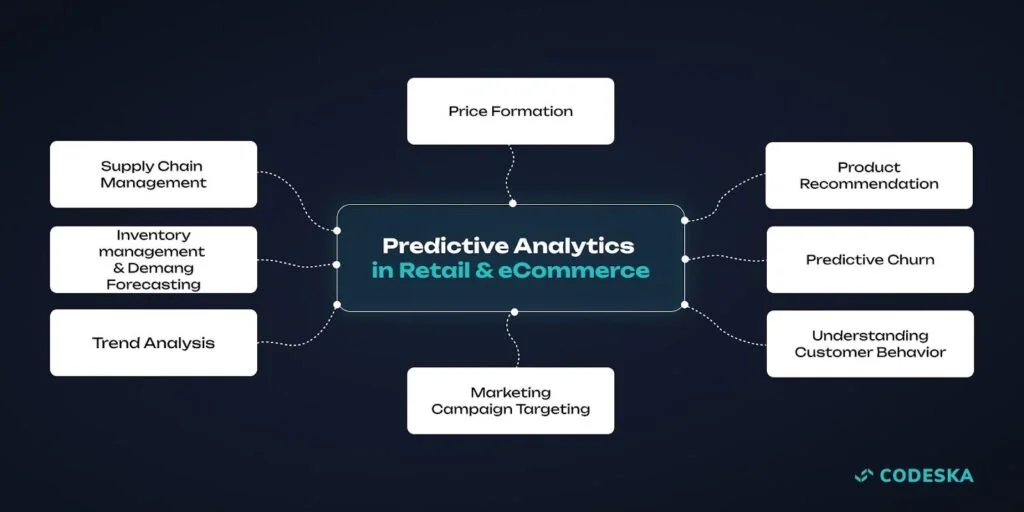
For example, one McKinsey case study describes an “AI-enabled supply chain control tower” that continuously adjusts procurement orders and warehouse distributions. As demand signals change (say, a sudden spike in widget sales), the AI can reallocate stock across warehouses or change delivery routes on the fly. This agility leads to better on-time availability and lower fulfillment costs. In a world where consumers expect “instant delivery,” such real-time optimization is a game-changer.
- Reduced inventory waste – leading distributors using AI report 20–30% lower inventory levels without running out of stock.
- Cost savings – the same studies find 5–20% cuts in logistics and transportation expenses. Even a 10% reduction in shipping costs can significantly boost margins.
- Concrete impacts – companies using AI-driven demand forecasting see about 20% lower inventory and ~10% lower supply-chain costs overall (thanks to smarter warehousing and routing decisions).
In short, AI-powered predictive analytics will make eCommerce logistics smarter and leaner by 2026. Retailers who leverage AI in their supply chain will deliver products faster and more reliably, earning customer trust (and repeat business) while trimming overhead.
5. Immersive AR & VR Shopping
Augmented Reality (AR) and Virtual Reality (VR) are set to bring the in-store experience online. By 2026, AR/VR shopping will be commonplace in eCommerce. The AR market alone is projected to top $100 billion by 2026, and around 70% of businesses are expected to adopt some form of AR/VR technology by then. What does this mean for online retail? Shoppers will increasingly expect to “try before they buy” in a virtual sense.
For example, a home furnishings store developed by Codeska might let customers use an AR app to place a 3D model of a sofa in their living room via their phone camera. A clothing retailer might offer a virtual mirror that shows how a jacket looks on the customer’s own image. According to surveys, 60% of online shoppers say they’re more likely to purchase a product if they can view it in 3D or AR. AR experiences also boost customer confidence: about 66% of shoppers report feeling more confident in their buying decisions when they can rotate and inspect a product in 3D.
The business impact is significant. Retailers who use AR see dramatically higher engagement (+200%) and conversion (+94%). Crucially, AR also cuts returns: studies show about a 22% reduction in return rates when customers can preview items in 3D/AR. (Customers simply make fewer mistakes about size, color, or style when they’ve “seen” the item virtually.) By 2026, offering AR try-ons and VR showrooms will be a competitive differentiator, especially for categories like furniture, fashion, and beauty.
- Boosted confidence: Shoppers using AR are far more sure of their purchase. In one survey, 60% said AR/3D previews make them more likely to buy.
- Lower returns: Retailers report roughly a 22% fewer returns after deploying AR tools, because customers can visualize the product accurately before ordering.
- Wider adoption: Major brands are investing heavily. For instance, Google and Shopify offer AR ad formats, and companies like Warby Parker and IKEA have AR apps for product try-ons. By 2026, most tech-savvy consumers will expect such features.
In summary, immersive shopping experiences powered by AR/VR will be essential for reducing friction and delighting customers. They make online shopping more like real-life browsing – fun, informative, and risk-free – which in turn drives higher sales and loyalty.
By 2026, AI will no longer be optional – it will define how eCommerce platforms operate, scale, and compete. Hyper-personalization, agentic AI, visual and voice commerce, predictive analytics, and immersive AR/VR experiences are not just trends; they are strategic levers for driving revenue, loyalty, and efficiency.
Yet technology alone is not enough. Real impact comes from a robust, maintainable, and scalable technical foundationthat allows AI to perform at its best. Systems must be designed to evolve with business needs, ensuring reliability and long-term value.
With extensive experience in developing and scaling eCommerce solutions – from agile online stores to high-load marketplaces – Codeska helps businesses implement AI-powered strategies while building platforms that last. The combination of forward-looking technology and solid engineering creates platforms that delight customers, optimize operations, and deliver measurable growth.
Final Thoughts
By 2026, Artificial Intelligence will no longer be an optional feature but the core engine of successful eCommerce platforms. Advanced capabilities – from hyper-personalization and agentic AI assistants to visual and voice search, predictive analytics, and immersive AR/VR experiences – will determine how effectively businesses attract, convert, and retain customers. Each of these trends offers a measurable impact on revenue, operational efficiency, and long-term customer loyalty.
Yet implementing AI without a solid technical foundation limits its potential. Scalable architectures, maintainable code, and robust infrastructure are essential to ensure AI solutions perform reliably under high load, adapt to evolving business requirements, and deliver consistent value over time. In other words, AI delivers maximum ROI only when built on platforms designed for growth, flexibility, and operational resilience.
For eCommerce leaders, success in 2026 will depend not just on adopting new technologies, but on integrating them thoughtfully within well-engineered, future-proof systems. Platforms that achieve this balance will be able to delight customers, optimize internal processes, and sustain competitive advantage in an increasingly AI-driven marketplace.