Small businesses in the product niche often face the problem of effective sales management.
Entrepreneurs invest in landing pages, social media and marketplaces, but without a proper tracking and automation system, the workload of processing incoming orders grows disproportionately to profit. Leads start getting lost between messengers, email and spreadsheets, managers work chaotically and the business owner loses control over processes.
At this point, a logical question arises: how can a CRM help a product-based business?
A CRM (Customer Relationship Management) system is a tool for managing customer relationships that collects, stores and analyzes customer data to increase sales efficiency and service quality.
A CRM system covers the key operational tasks faced by small product businesses:
- Customer loss prevention – all orders are recorded in one place; nothing gets lost in chats, email or Excel.
- Team’s time economy – automation of routine order-processing tasks (creating waybills, changing statuses, customer notifications etc.).
- Employee performance control – transparent processes, fewer mistakes and protection against abuse.
- Customer database compilation – the foundation for repeat sales, upsells and marketing campaigns.
- Sales analysis – control of revenue, average order value, manager performance and acquisition channels.
That’s why a CRM becomes not just a contact storage tool but the control center of a product business. It automates routine processes, shows the real sales picture in real time, helps manage the team and frees up resources for scaling.
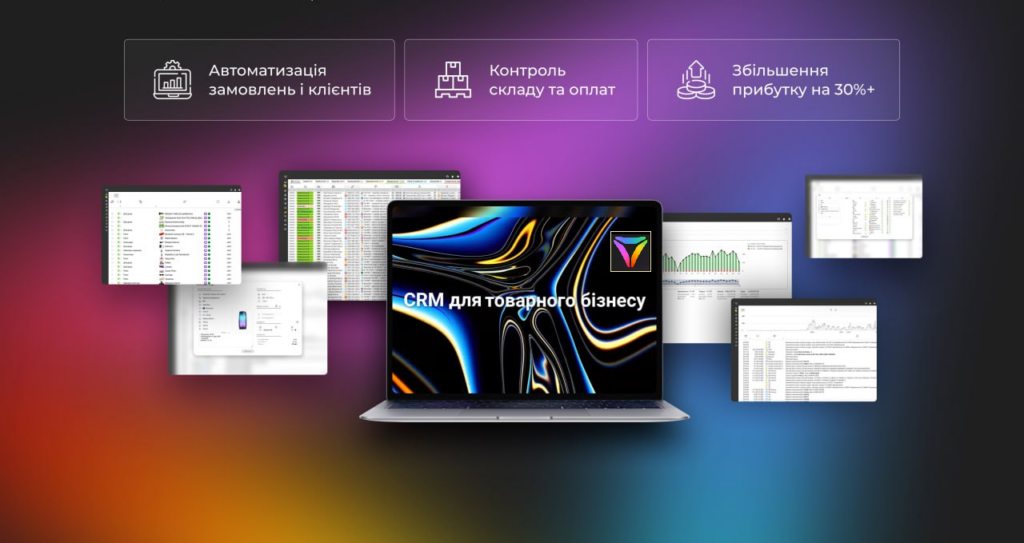
But how do you choose a CRM for a small business without going over budget and without facing technical difficulties during implementation? The LP-CRM team – a leading CRM system for product businesses in Ukraine – answers this step by step using real examples.
Step 1. Define Your Core Business Needs
Before choosing a CRM, clearly understand which processes you want to automate – contacts, deals, calls, analytics etc. Without this, the system risks being either too complex or unable to cover key business tasks.
For a product business, the main needs usually include:
- Order tracking from multiple sources. Automatic collection of leads from landing pages, social media, marketplaces, and messengers into a single system without manual copying.
- Delivery management and postal service integrations. Creating waybills, tracking shipments, and monitoring delivery statuses without switching between services.
- Integration with other services. Connecting telephony, chatbots, payment systems, and advertising accounts for end-to-end sales automation.
- Manager performance control. Transparent lead distribution, action tracking, order-processing control and reduced human error.
- Inventory synchronization. Real-time stock balances to avoid out-of-stock sales and assortment mismatches.
- Sending SMS and fiscal e-receipts (PRRO). Automatic customer notifications and legal compliance without manual operations.
- Sales and profitability analytics. Reports on revenue, average order value, upsells, margins, manager performance, and traffic channels.
List the tasks the system must solve from day one. This will help you avoid overpaying for unnecessary features and select a solution that truly supports business growth.
Step 2. Choose a Simple CRM
CRM functionality and complexity must match your actual sales volume and business stage. If your product business is just starting or scaling gradually, an overly complex system with many modules will create more problems than benefits.
At this stage, choose a CRM that you can launch quickly without a technical team, with minimal setup and clear logic.
Pay attention to:
An intuitive interface
The CRM should be easy for managers and business owners to use on a daily basis, without complex terminology or overloaded screens. Users should be able to start working in the system immediately, without spending much time searching for the necessary features, and focus on sales rather than on learning how the system works.
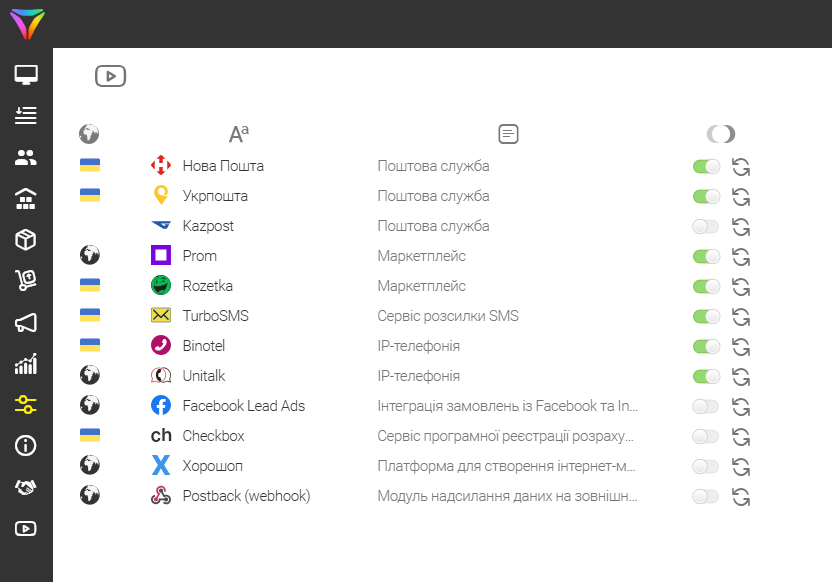
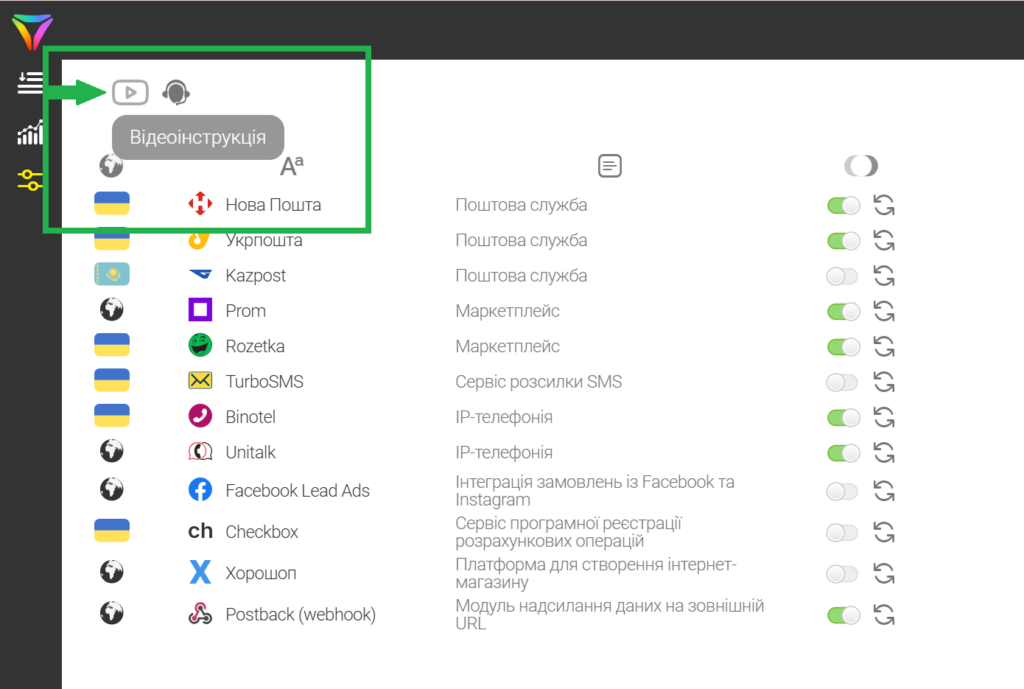
Built-in integrations
The CRM should be able to connect to various e-commerce platforms, landing pages, online stores, and marketplaces, as well as integrate with telephony and delivery services. This makes it possible to manage all sales channels efficiently and automate order processing.
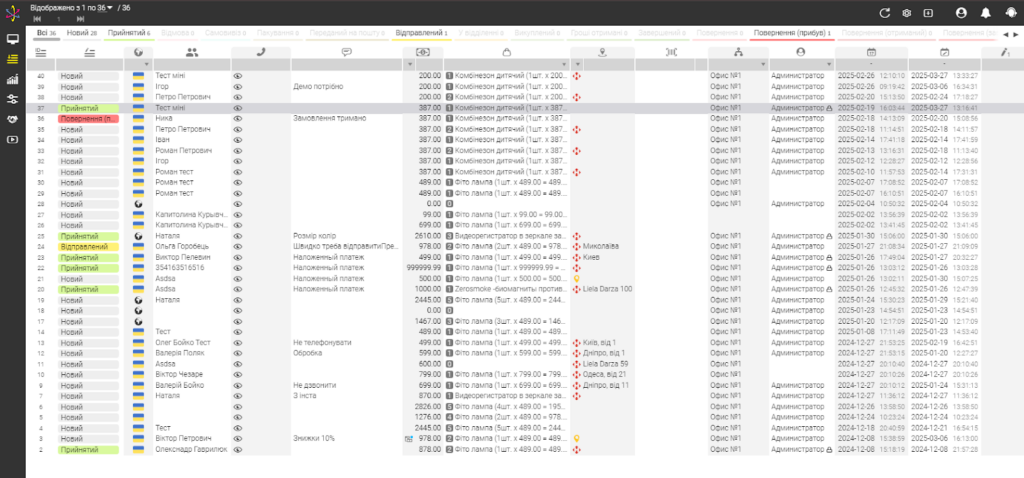
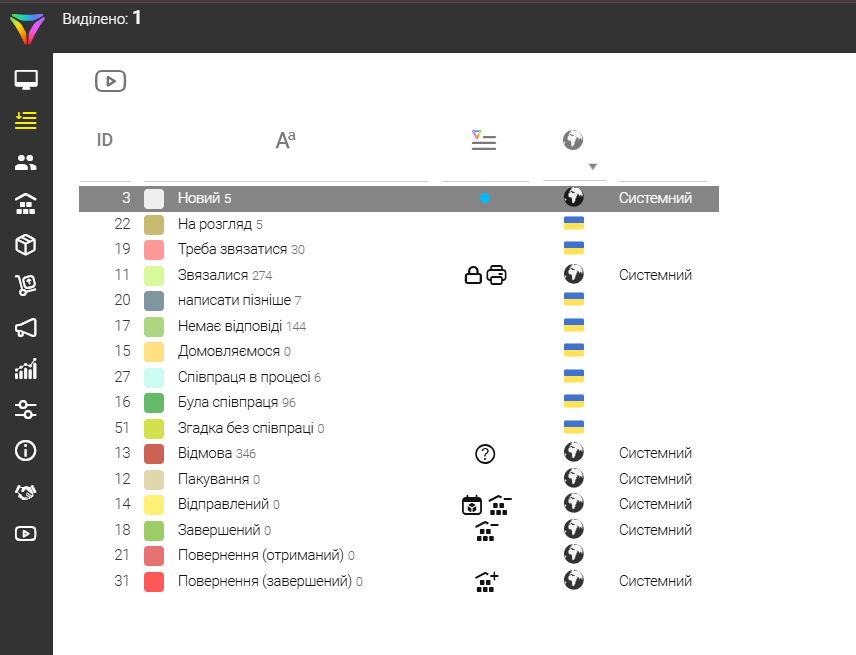
Auto-statuses for convenience
The initial setup of auto-statuses allows an order to move automatically to the required stage – for example, to “Completed” when the customer picks up the parcel from the post office. This saves the team time and minimizes manual work.
Training materials: videos and guides
Access to short guides and video tutorials significantly reduces the onboarding time for new employees and allows them to quickly master the CRM even without prior experience.
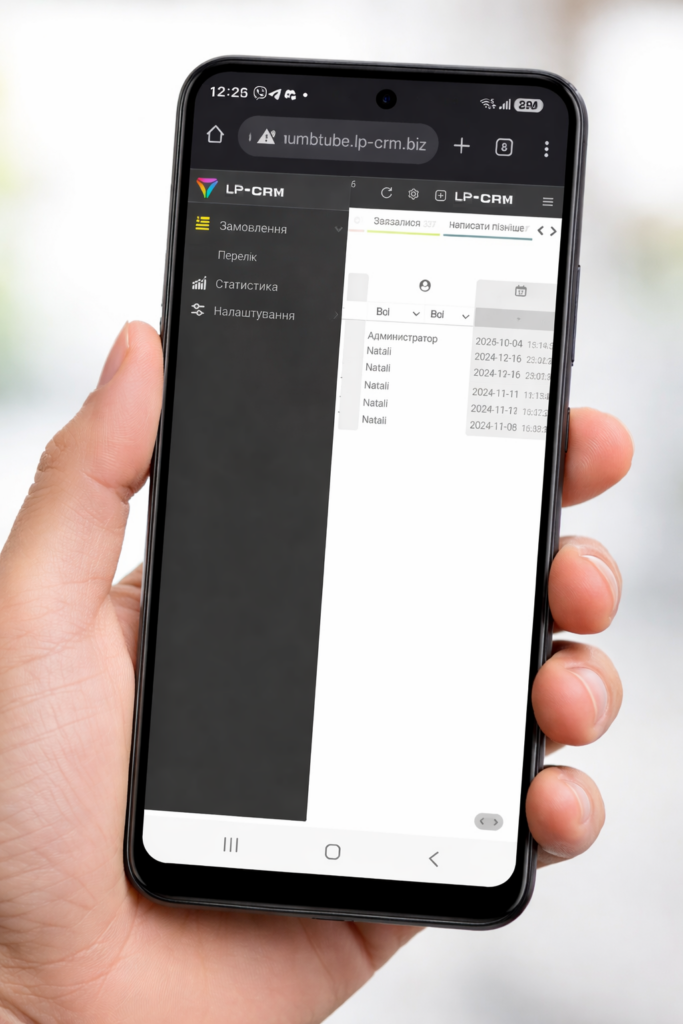
Mobile version for working on the go
The ability to manage orders, statuses, and inventory from a smartphone, respond to inquiries in real time and maintain a high level of customer service even outside the office.
Step 3. Test the Functionality on a Free Plan
For a small business, it’s important to start without large financial investments. A CRM may offer a wide range of features across different pricing plans, but not all of them are necessary at the beginning. Before purchasing a paid plan, test the system using a free or demo version.
Check:
- Availability of a demo or free trial
- What additional fees may apply (number of users, email/SMS campaigns, integrations)
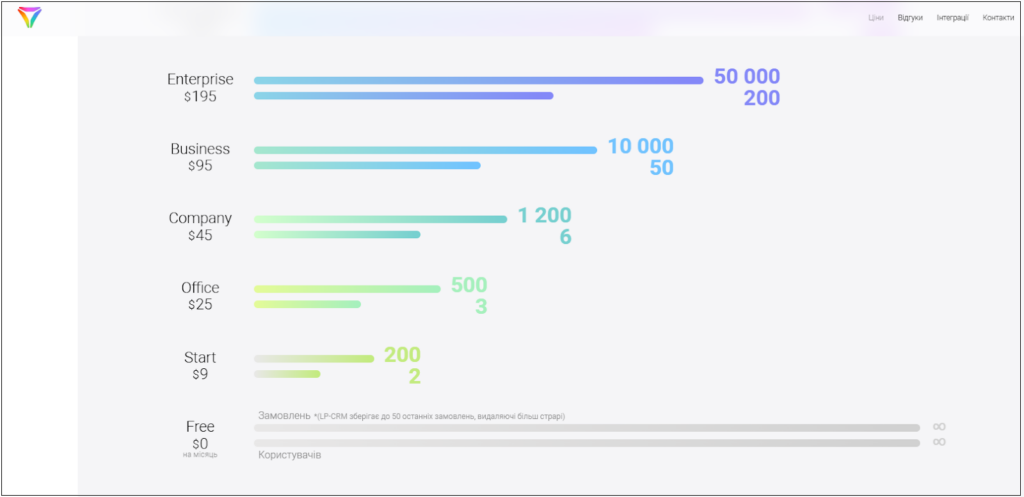
A free plan allows you to test the CRM without risking your budget, understand which features you actually need, and evaluate whether the pricing and cost structure are reasonable before upgrading to a paid version. This helps you avoid overpaying and choose a system that will truly support the growth of your product-based business.
Step 4. Evaluate the Available Features
Not all CRMs require hundreds of integrations at the start. Focus on core functionality that truly saves time.
1. Connection to sales channels
Check integration with:
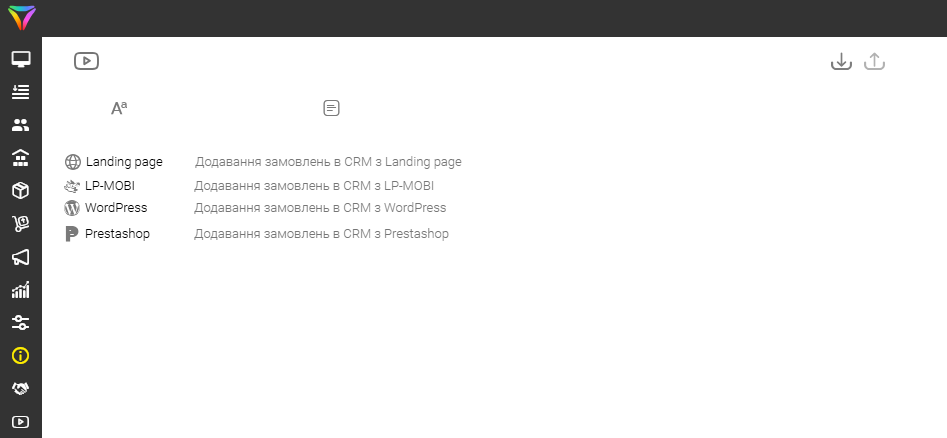
- Websites, landing pages, and CMS (WordPress, PrestaShop, Khoroshop)
- Marketplaces (Rozetka, PROM)
- Forms, chatbots, email
Automatic order flow without manual duplication minimizes technical сложности and speeds up launch.
2. Automation capabilities
Automation is one of the key advantages of a CRM for small businesses compared to other record-keeping systems. It saves time, reduces human error, and increases efficiency.
Practical examples:
- Automatic order status changes depending on delivery stage
- SMS after parcel pickup
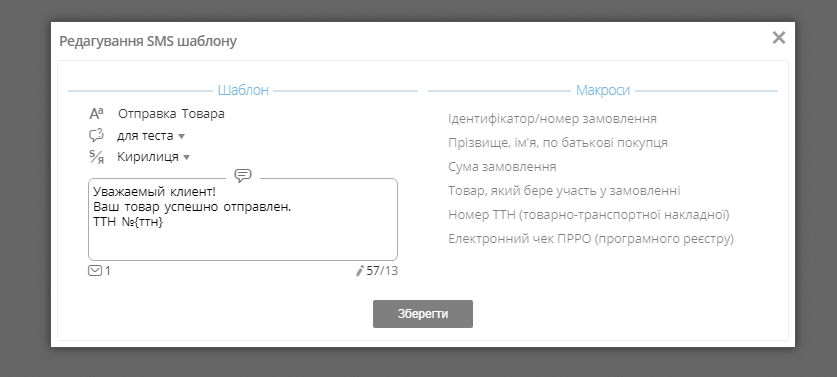
- PRRO receipt creation and refunds
- Automatic inventory calculation
With proper setup, automation can save up to 5 hours per day on order processing. This is critical for a small team.
3. Flexible access rights
The CRM should allow you to:
- Hide customer phone numbers and contacts
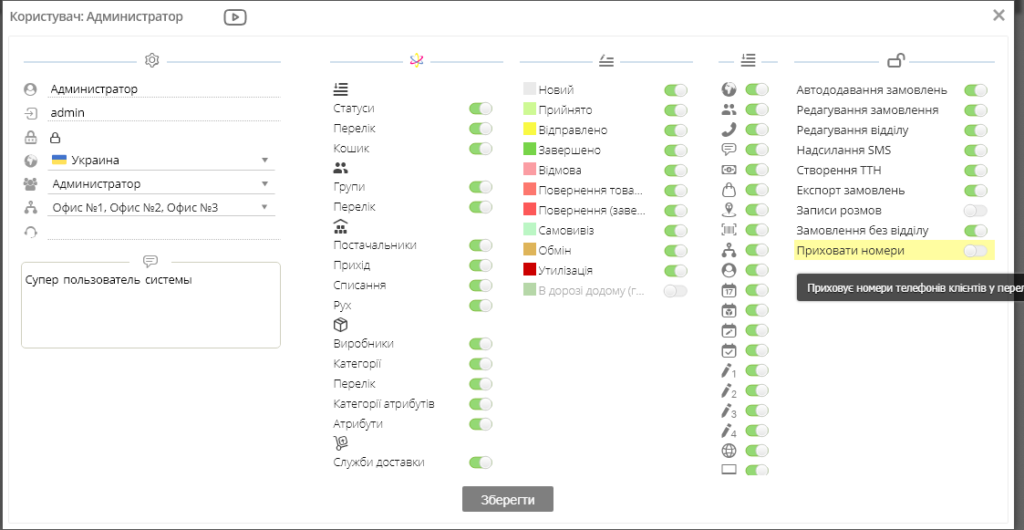
- Restrict access to financial data
- Allow editing only specific tabs
This increases data security and process control.
4. Analytics and scalability
Detailed analytics allows you to:
- Measure approval and redemption rates by product
- Calculate average order value and net profit
- Analyze upsells and manager performance
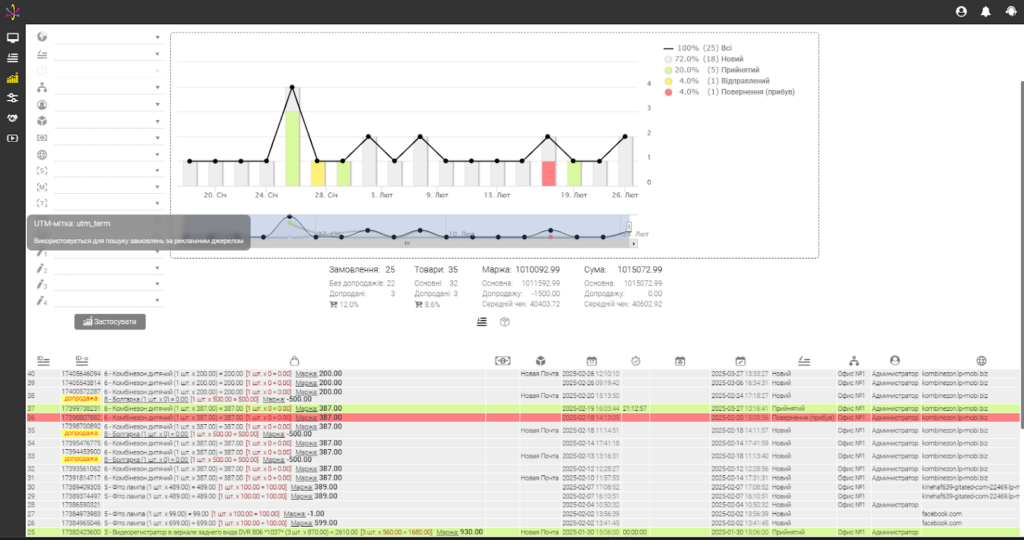
You can add new order sources and departments without losing control over processes.
When choosing a CRM, focus on essential integrations, automation and analytics, make sure it offers flexible access permissions, and assess its scalability potential. This will allow the system to work for you rather than create an additional technical burden.
CRM for Small Business: Simple, Fast, Effective
A simple selection algorithm:
- Make a list of your needs.
- Check integrations with your sales channels.
- Evaluate automation capabilities.
- Make sure access rights can be configured.
- Start with a free plan.
- Choose a system with analytics and scalability.
Control Points When Choosing a CRM
| Criterion | Why it matters |
| Ease of interface | Fast team training |
| Mobile version | Work from anywhere |
| UA support | Easier understanding of features |
| Demo period | Risk-free testing |
| Built-in integrations | Fewer technical issues |
| Price | Transparent, no surprises |
| Automation of custom processes | Saves team time and ensures quick order processing |
| Scalability | Opportunity to add new channels and users |
| Access control | Data safety and minimization of human mistakes |
Start with a Small Team and Simple Scenarios
You don’t need to implement everything at once:
First:
- Connect sales channels
- Create basic contacts
- Automate statuses
Then gradually add:
- Delivery service integrations
- SMS notifications and bulk messaging
- Inventory management
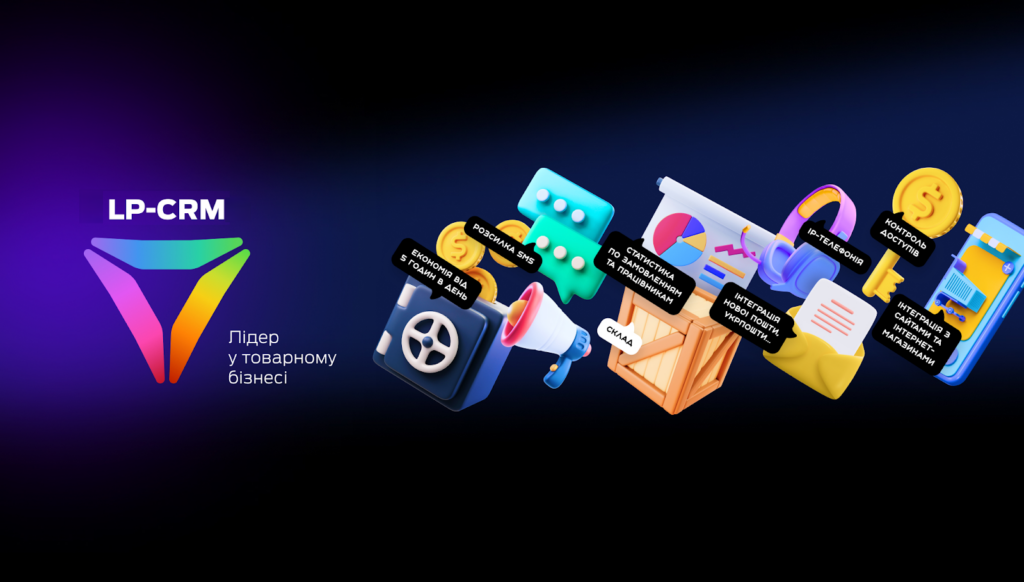
LP-CRM can become a convenient tool for a small product business: it combines automation, analytics and access control in one place. The system allows you to quickly set up basic processes, test functionality on a free plan and gradually connect additional integrations without extra costs or technical difficulties.