
Positive reviews on Google Maps directly affect business trust, local SEO and customers’ decisions to choose your services. To encourage people to share their good experiences, it’s important not only to provide quality service but also to properly stimulate feedback. A simple request, a convenient process and timely communication significantly increase the number of positive reviews without pressuring the customer.
Why Customers Don’t Leave Reviews (and How to Change That)
Customers often don’t leave reviews not because of poor service, but due to a lack of clear incentive and understanding of the value of feedback. In most cases, people are satisfied with the result but don’t see the need to spend time writing a comment or postpone it for later.
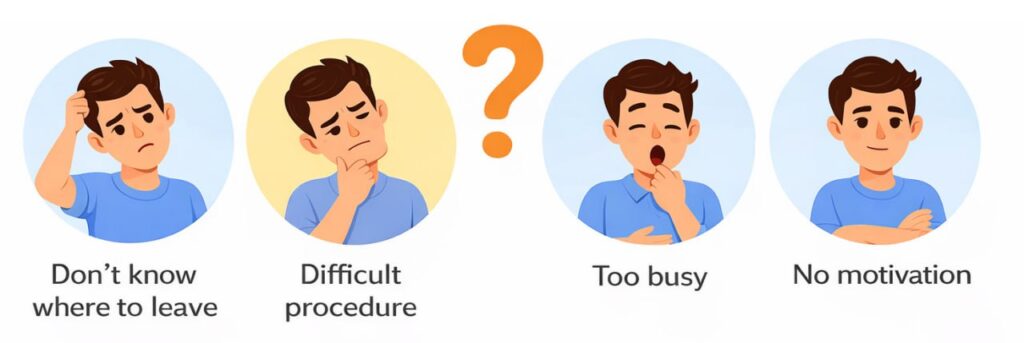
An additional barrier is a complicated process: searching for the company on Google Maps, signing in and having to formulate their opinion themselves. From the business side, the situation is worsened when customers are not asked to leave a review at all or are asked formally and at an inconvenient time. A typical mistake is also ignoring existing reviews – when a customer doesn’t see a response or a thank you, they conclude that their opinion doesn’t matter.
What really motivates people is simplicity and attention: a short personal request, a direct link to the review page and a clear explanation of why it matters to the business. When a customer feels that they are helping the company grow and that their feedback is read and valued, the number of positive reviews increases naturally and without pressure.
When Is the Best Time to Ask for a Review
Choosing the right moment to request a review directly affects whether the customer will follow through. The most effective time is immediately after the service is provided, when the result is already clear and emotions are still positive. During this period, customers are much more willing to share their impressions because the experience is fresh and doesn’t require additional clarification. That is why working with reviews on Google My Business yields the best results when requests are made in a timely manner. If the request is delayed, the customer often postpones the action or forgets about it entirely.
The interaction format depends on the communication channel. In offline situations, a brief verbal request at the end of the service, when the customer is satisfied, works well. In online formats, messages via messengers, SMS or email with a direct link to the review page are effective. It is important that the customer does not have to search for the company manually or perform unnecessary steps.
To make the process as simple as possible, Google Maps provides a special personal link for leaving a review. This link takes the customer directly to the review form, without having to search for the company or take additional steps. Using such a link significantly increases the number of reviews, as it removes the main barrier – the complexity of the action.
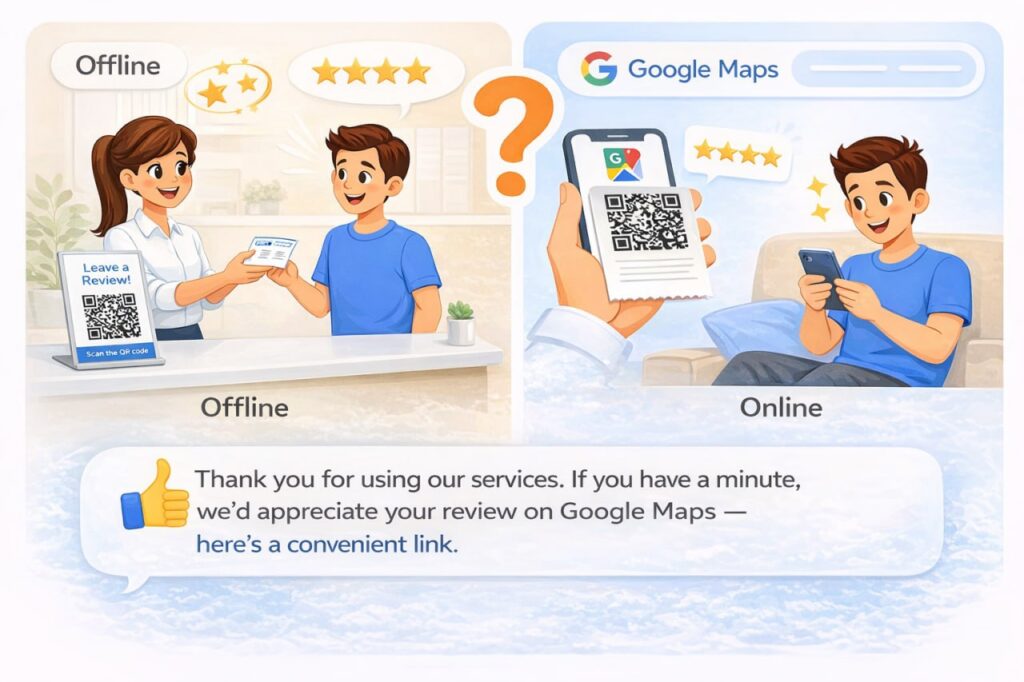
Example of a Proper, Non-Intrusive Request:
“Thank you for using our services. If you have a minute, we would appreciate your review on Google Maps – here is a convenient link.”
This wording works better than direct pressure, as it emphasizes gratitude and convenience for the customer. It’s important to ask only once, without frequent reminders and always maintain a friendly tone. When a customer feels respected and experiences ease in interaction, reviews are much more likely to appear.
Make the Process Simple: Leave a Review in 1 Minute
The fewer steps required from the customer, the higher the likelihood of a Google review being left. The main goal is to remove any barriers and make the process as intuitive and fast as possible. One convenient method works much better than detailed instructions or requests to “come back later.” Focus on simple and clear solutions: a direct link to the page, a QR code or a short instruction. This way, the customer can leave a review quickly and effortlessly and your business receives more positive ratings, increasing trust online.
The most common method is a direct Google Maps link – use a personal review link that opens the rating form immediately without manually searching for the company. It looks like this: https://g.page/r/CdjkOizpwc_TEAE/review
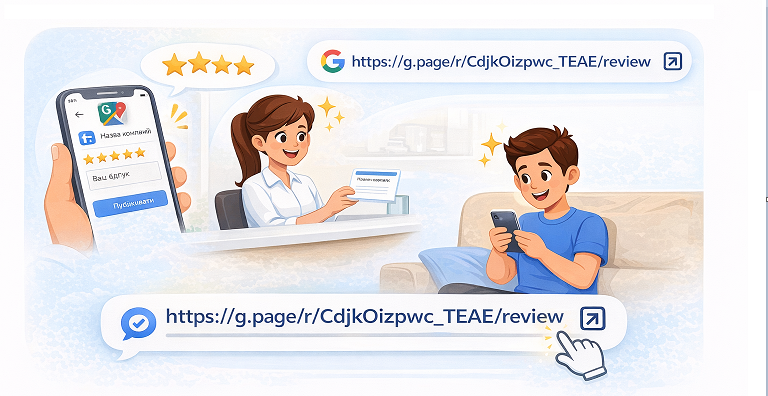
QR codes in the office or on receipts – place a QR code at the reception, on the administrator’s desk, in the waiting area or on the fiscal receipt so the customer can leave a review directly from their smartphone. It’s best to include instructions on how to do it.
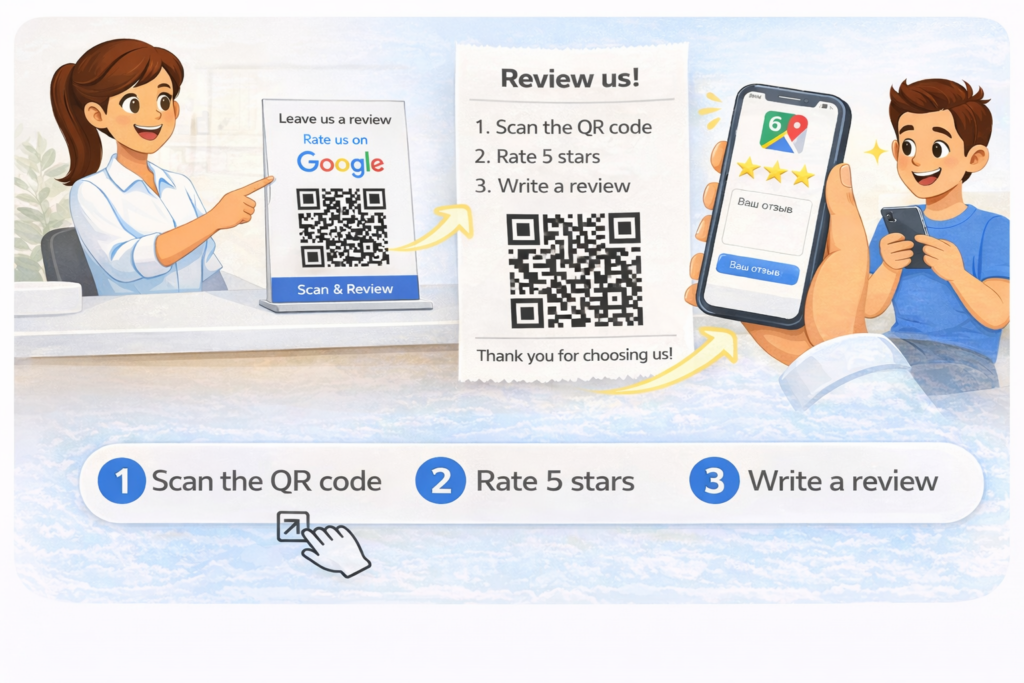
When the customer understands that leaving a review takes less than a minute and requires no effort, the decision to write it becomes much easier.
Handling Negative Reviews as a Trust-Building Tool
Negative reviews do not reduce trust on their own. What reduces trust is a lack of response or an inappropriate response. When a business openly reacts to criticism, it is perceived as a sign of honesty and a responsible approach to customers.
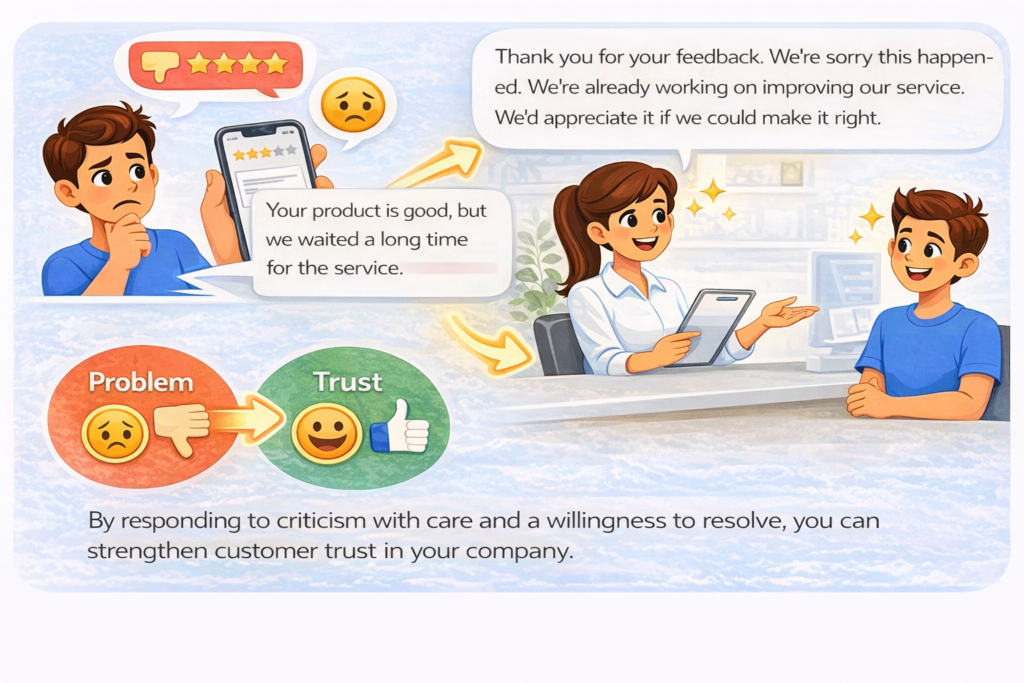
- Why you shouldn’t ignore negative reviews – when a customer leaves negative feedback and gets no response, other users conclude that a similar situation could happen to them. For example, a comment like “We waited a long time for service” without a reply looks like confirmation of the issue. Conversely, a short response shows that the business monitors the situation and works on service quality.
- How to Respond Properly – the reply should be public, calm, and without excuses. It is important to thank the customer for the feedback and show willingness to resolve the issue.
Example of a Proper Response:
“Thank you for your feedback. We are sorry this situation occurred. We have already passed the information to the responsible manager and are working to improve our service. We would be glad if you give us a chance to correct your experience.”
- How negative reviews can increase positive ones – open and constructive responses motivate other customers to share their positive experiences. When people see a business reacting to criticism, they are more likely to write reviews like: “Everything went perfectly, the staff was attentive and helped quickly.” In many cases, even the customer who left negative feedback updates their review or adds a positive comment after the issue is resolved.
Proper handling of negative reviews turns criticism into proof of reliability and builds trust even before the first contact with the business.
Common Mistakes When Working with Google Maps Reviews
Handling reviews on Google Maps without a clear strategy often leads to loss of trust and reduced local promotion effectiveness. Even with many ratings, a business can lose potential clients due to common mistakes that are easy to avoid:
- Purchased Reviews – one of the riskiest practices. Fake comments usually have unnatural style, repeated wording, and appear rapidly in a short time. Google can easily detect such activity, which can reduce profile trust or even lead to Google Maps restrictions. Users also quickly notice insincerity, negatively affecting business reputation.
- Template Responses – automatic or identical reactions to all reviews create the impression of a formal approach to clients. When people see unpersonalized replies, trust decreases, even if the review itself is positive. It is much more effective to respond briefly and substantively, showing that the comment has been read and is important to the business.
- Lack of Systematic Approach – chaotic review management, where responses appear once every few weeks or only to negative reviews, looks unprofessional. Google Maps considers regular activity and customers notice whether the business maintains consistent contact. A systematic approach to reviews builds stable trust and positively affects the company’s overall visibility.
Avoiding these mistakes allows you to turn reviews from a formality into a real tool for trust and business growth on Google Maps.
Conclusion
Positive reviews on Google Maps are not accidental – they are the result of systematic and thoughtful work with customers. A convenient process, the right moment to request feedback, personal communication, handling negativity, and consistency build trust, enhance local promotion, and directly affect the number of inquiries. Businesses that consciously work with reviews gain a competitive advantage even before the first customer contact.
At the same time, effective local promotion on Google Maps and proper management of Google My Business require experience, time and a clear strategy. If your goal is to attract more new customers, increase visibility on Google Maps, and turn reviews into a consistent acquisition channel, it is worth turning to professionals. We can help build a local promotion system, optimize your profile and achieve measurable results for your business.